
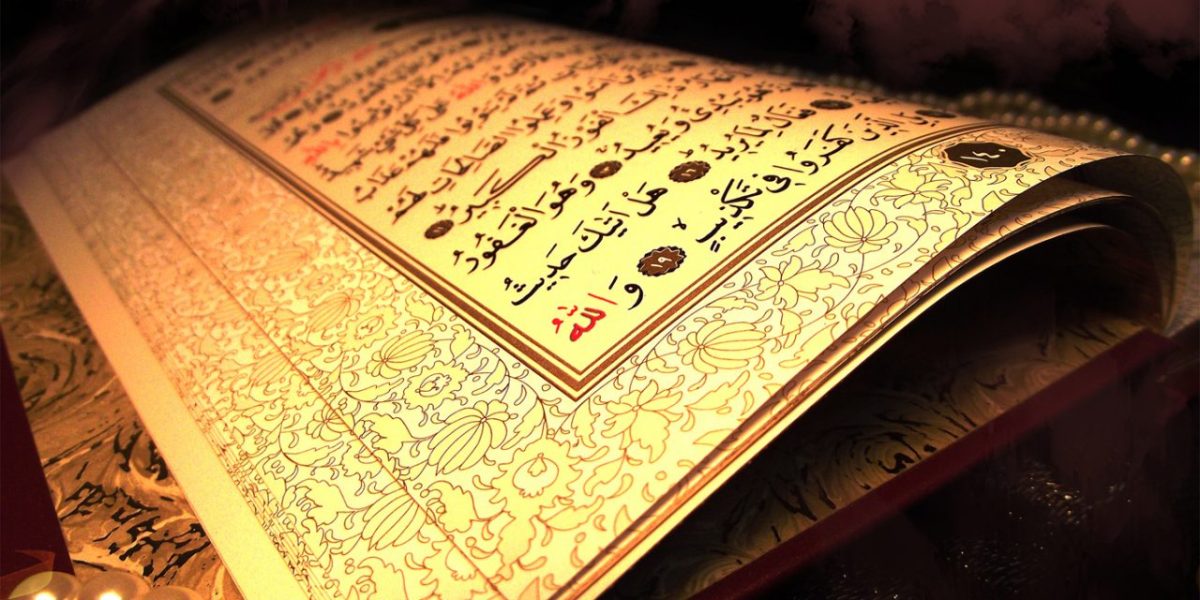
“Devote yourselves to God and assign Him no partners, for the person who does so is like someone who has been hurled down from the skies and snatched up by the birds or flung to a distant place by the wind. …
“We have made camels part of God’s sacred rites for you, … so invoke God’s name over them as they are lined up for sacrifice. … It is neither their meat nor their blood that reaches God but your piety.” (Quran, 22:31, 36–37)
The Quran is full of colorful imagery and metaphors that convey spiritual concepts, some of which center around animals like the birds and camels mentioned here.
The first one, being “snatched up by the birds” and “flung to a distant place by the wind,” reminds me of that unfortunate babysitter in Jurassic World who gets carried off by a pterodactyl, tossed around in the air a few times, dunked and bashed in the water, and then chomped whole by a mesosaurus. It seems unnecessarily brutal if taken literally, but I think the idea being conveyed here is that if you hold anything else in equal esteem to God as a “partner”—be it an ideology, a personal ambition, or other people—you won’t exactly have solid footing to stand on. In fact, you’re likely to be “tossed to and fro, and carried about with every wind of doctrine” (Ephesians 4:14). Your devotion needs to be singular and exclusive.
The second one, referring to camels as sacrificial animals, makes the point that God has no practical need for any offering we can give Him. Whether it be sacrificial animals that were instituted under the Law of Moses or vocal praise or monetary donations on our part today, these offerings in and of themselves don’t matter. What ultimately matters is that behind our offerings, we give the one thing God doesn’t already have: our piety. And even then, this isn’t for His benefit, but for our own. The only way our efforts to follow God will actually matter is if we allow ourselves to be changed by the process, becoming more receptive to the fuller joy God can then give us.
 The Commonplace Notebook